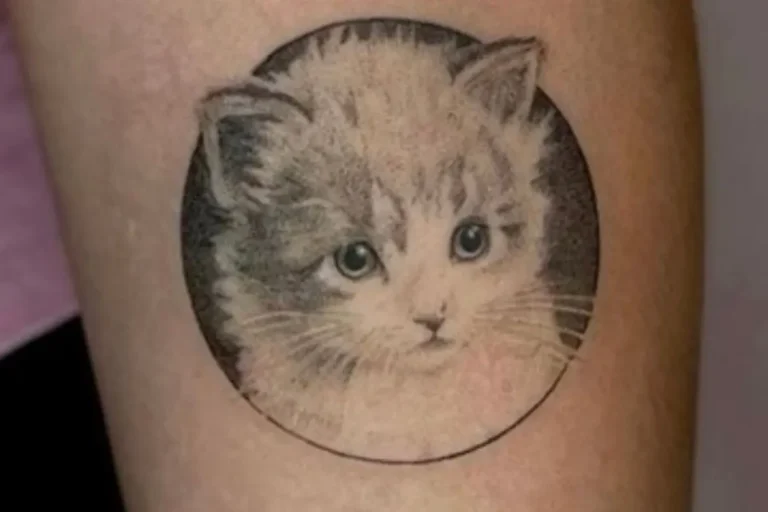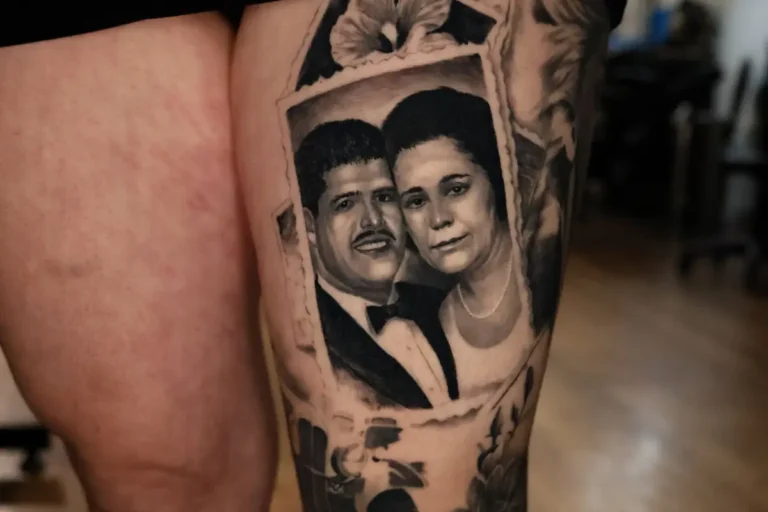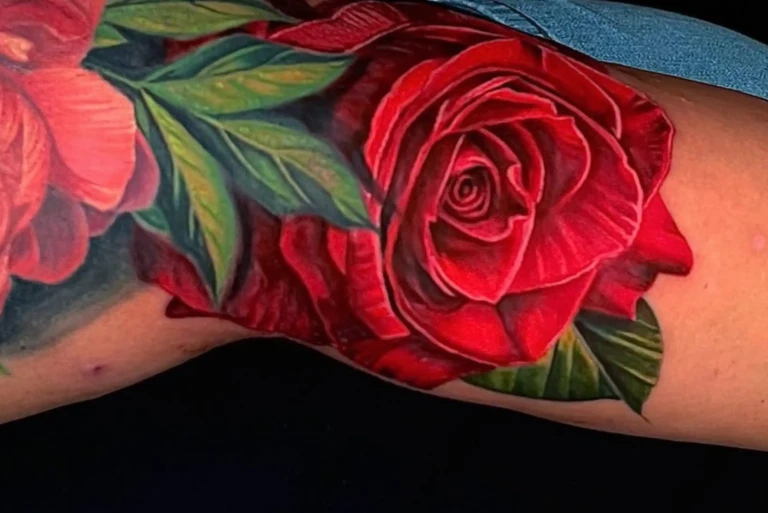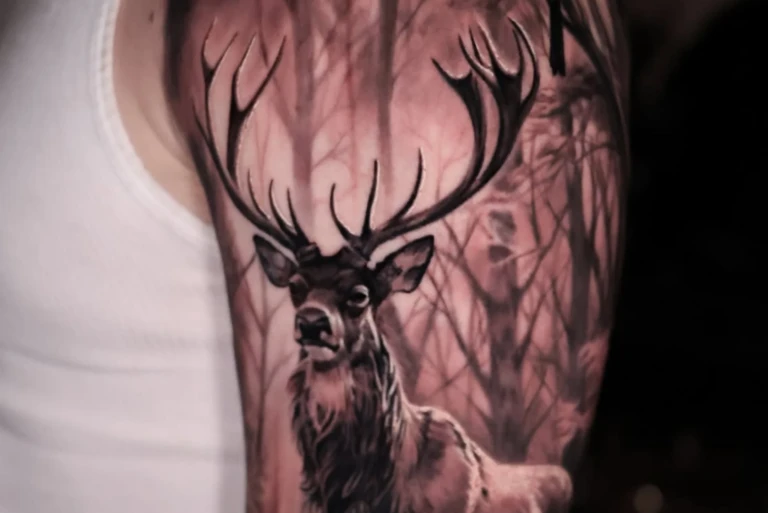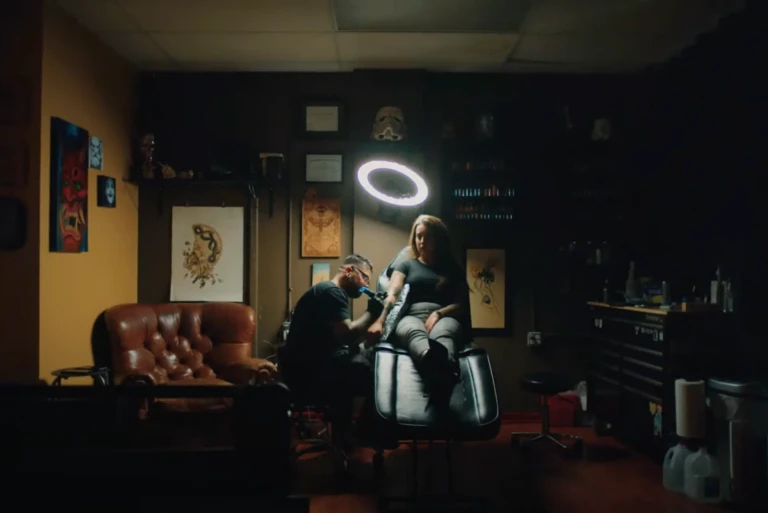
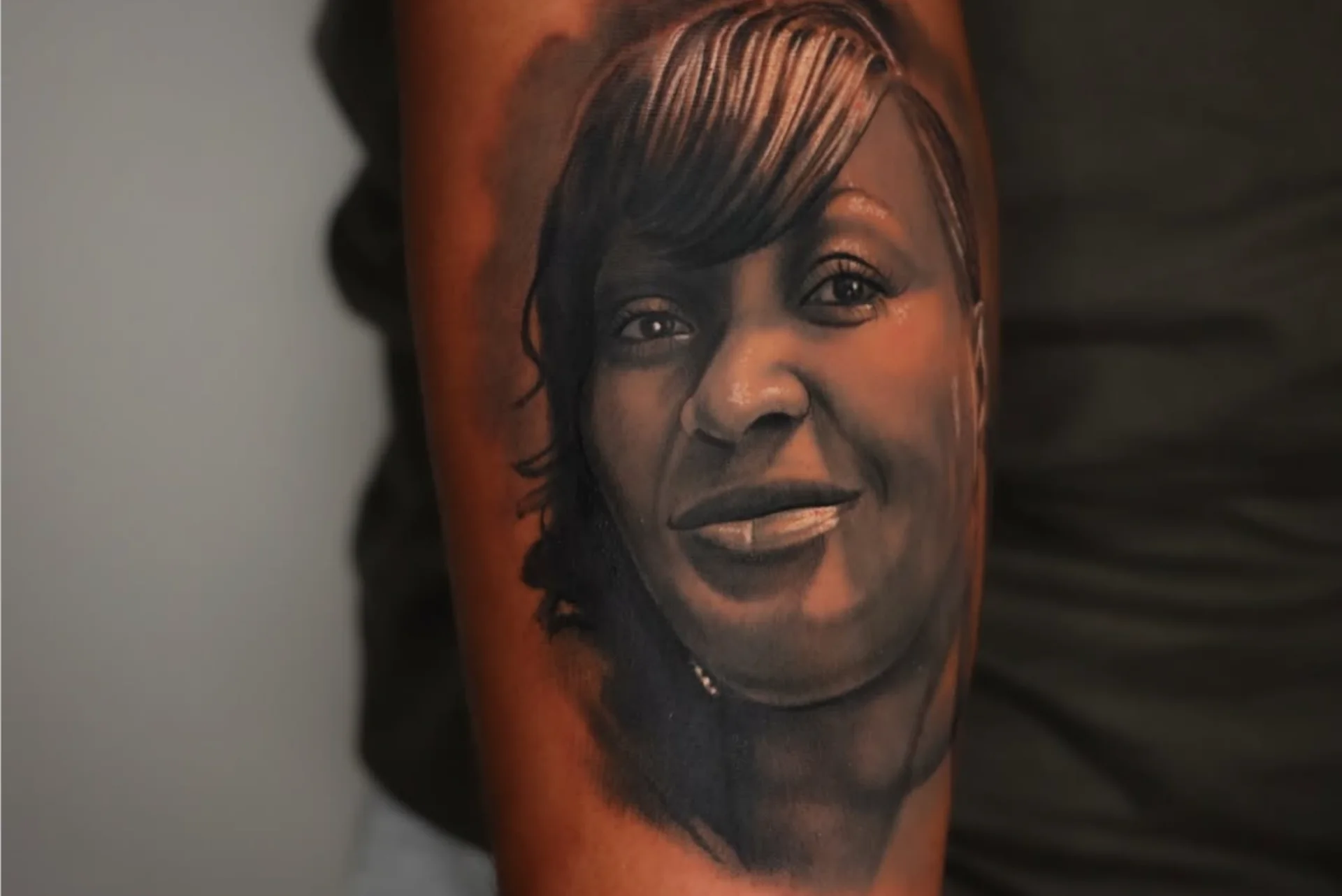
A memorial portrait tattoo is a realistic likeness of a person or pet who has passed, tattooed from a photograph. The result comes down to three things: the reference photo, the style (black and grey or color), and the skill of the artist. This guide walks through how to get each one right.
Losing someone changes what you want to keep close. For a lot of people, a memorial portrait tattoo becomes the answer: a faithful likeness of a person or a pet, carried on your own skin, so their face stays with you. It is one of the most personal tattoos there is, and one of the hardest to do well.
- What a memorial portrait tattoo is, and why it is one of the hardest tattoos to do well
- How to choose a reference photo that captures a true likeness
- When black and grey suits a memorial better than color
- Which personal touches you can add, from names and dates to handwriting
- Where a memorial portrait sits best, and how it ages over the years
- How to choose an artist who truly specializes in portrait work
What Is a Memorial Portrait Tattoo?
A memorial portrait tattoo is a realistic likeness of a person or pet who has passed, tattooed from a photograph. Its goal is accuracy and emotional resonance. The face has to be recognizable, and it has to feel alive.
Portrait work sits at the most technically demanding end of tattooing. A small deviation in the spacing of the eyes, the curve of a smile, or the depth of a shadow can make a face unrecognizable. That is why three things carry equal weight: the reference photo, the subject, and the skill of the artist. If you want to understand the craft behind it, we break it down in what makes realistic tattoos look so lifelike.
What Makes a Memorial Portrait Different
Unlike decorative ink, a memorial portrait carries a real face, someone irreplaceable. That raises both the emotional stakes and the technical bar. People most often commemorate a parent, a grandparent, a child, a partner, or a pet, and the piece becomes a permanent act of remembrance worn every day. Because the subject matters so much, memorial portraits reward patience: the right photo, the right artist, and a design you have taken time to get right.
Choosing the Right Reference Photo
The photo you work from shapes the entire result, so it is the first thing to get right. You do not need a studio portrait. You need an image with enough information for an artist to read a likeness. A few things make a real difference:
- Sharp beats large. A crisp, in-focus photo matters far more than a big blurry one. If you can zoom in on the eyes and they still hold detail, that is a strong start.
- Good, even light. Soft natural light shows the face honestly. A harsh flash flattens features, and deep shadow hides the detail an artist needs.
- An expression that was theirs. A candid look they always wore usually captures more of the person than a stiff, posed shot.
- Old or damaged photos still work. Faded, creased, or torn images are common for memorial pieces. A skilled artist can rebuild missing detail and restore the likeness at the design stage.
- Bring more than one. A main photo for the likeness plus a couple of extra angles gives the artist room to get the features right.
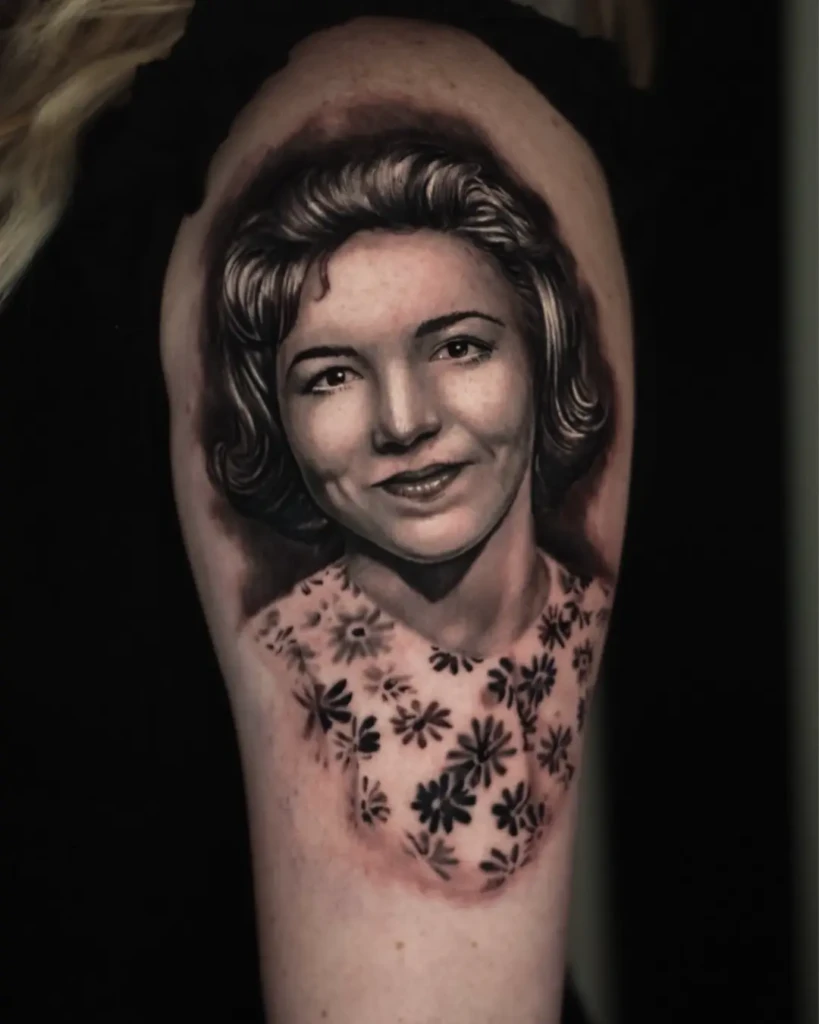
High-Quality Reference Photos: A clear, high-resolution image is the foundation of a great portrait tattoo. To ensure accuracy, the photo must capture details like lighting, shadows, and expressions. For instance, a crisp image taken in natural light works better than a blurry or grainy snapshot.
Layered Shading: Artists apply multiple layers of ink to create depth, mimicking how light interacts with skin, hair, or clothing. This technique is crucial for realistic textures, like the softness of a pet’s fur or the creases in a leather jacket.
Placement and Size
A realistic face needs room to breathe. Fine detail in the eyes and features reads best at a medium size or larger, which shapes where a memorial portrait tends to sit:
- Upper arm and forearm. The most common choice. Flat, visible, and forgiving, with space for detail.
- Chest. Popular for portraits that carry deep meaning, often placed over the heart. Expect more sensitivity near the sternum.
- Back. Room for larger or multi-subject memorial pieces.
- Thigh and calf. Large, relatively flat canvases, good for those who prefer less visible placement.
It is best to avoid highly curved areas like the elbows, knees, and wrists for the main portrait, where detail can distort and fade faster.
How Memorial Portrait Tattoos Age, and How to Care for Them
A memorial portrait is meant to last a lifetime, and it will if you look after it. The first two weeks set the foundation: keep it clean, moisturize with an unscented product, and stay out of direct sun while it heals. Follow your artist’s specific instructions, and never pick at scabs.
Over the long run, sun protection is the single most important habit. UV exposure is the main cause of fading, so SPF 50 on a healed portrait before any sun keeps the contrast and fine detail crisp. Daily unscented moisturizer preserves ink saturation and line clarity. Most portraits also benefit from a touch-up at six to twelve months, which is normal and expected, not a sign of poor work.
How to Choose an Artist for a Memorial Portrait
Portrait work is a specialty, not every talented artist does it. Look for someone with a dedicated realism portfolio, and ask to see healed work rather than only fresh photos, since healed detail is the real test. For a full walkthrough, read our guide on how to find a good tattoo artist in Chicago.
Ready for a Memorial Portrait?
When you are ready to plan one, our memorial portrait tattoos in Chicago service walks you through the consultation, the design, and the session with realism artists who specialize in this exact work. There is no rush and no pressure, only careful guidance when you want it.
Frequently Asked Questions
It depends on size and detail. A small portrait can take a few hours, while larger or highly detailed pieces are split across multiple sessions to protect the quality of the work.
Often yes. High-resolution photos give the best accuracy, but a skilled realism artist can enhance and rebuild older or damaged images. Bring what you have to a consultation for honest advice.
Black and grey is the classic, timeless choice and ages very gracefully, which is why most memorial portraits use it. Color is a beautiful option when a specific color is part of the story. The right answer depends on your photo and the feeling you want.
With care, yes. Sun protection is the biggest factor, since UV is the main cause of fading. Daily moisturizing and an occasional touch-up keep the detail sharp for many years.
Can you tattoo a memorial portrait of a pet?
Yes. Dogs and cats are among the most requested memorial subjects. Multiple reference photos help capture an animal’s expression. You can read more on our pet portrait tattoo page.