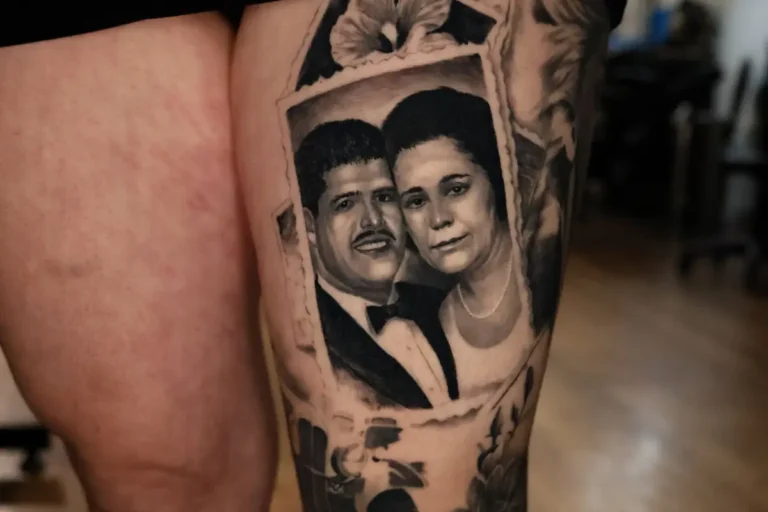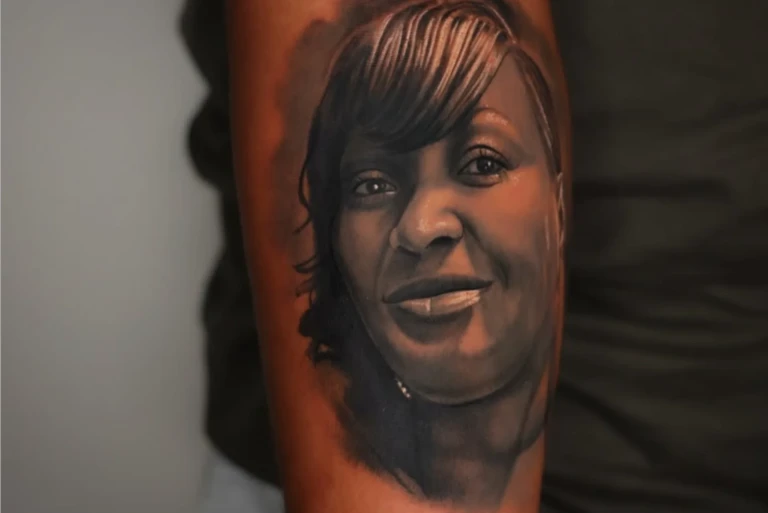
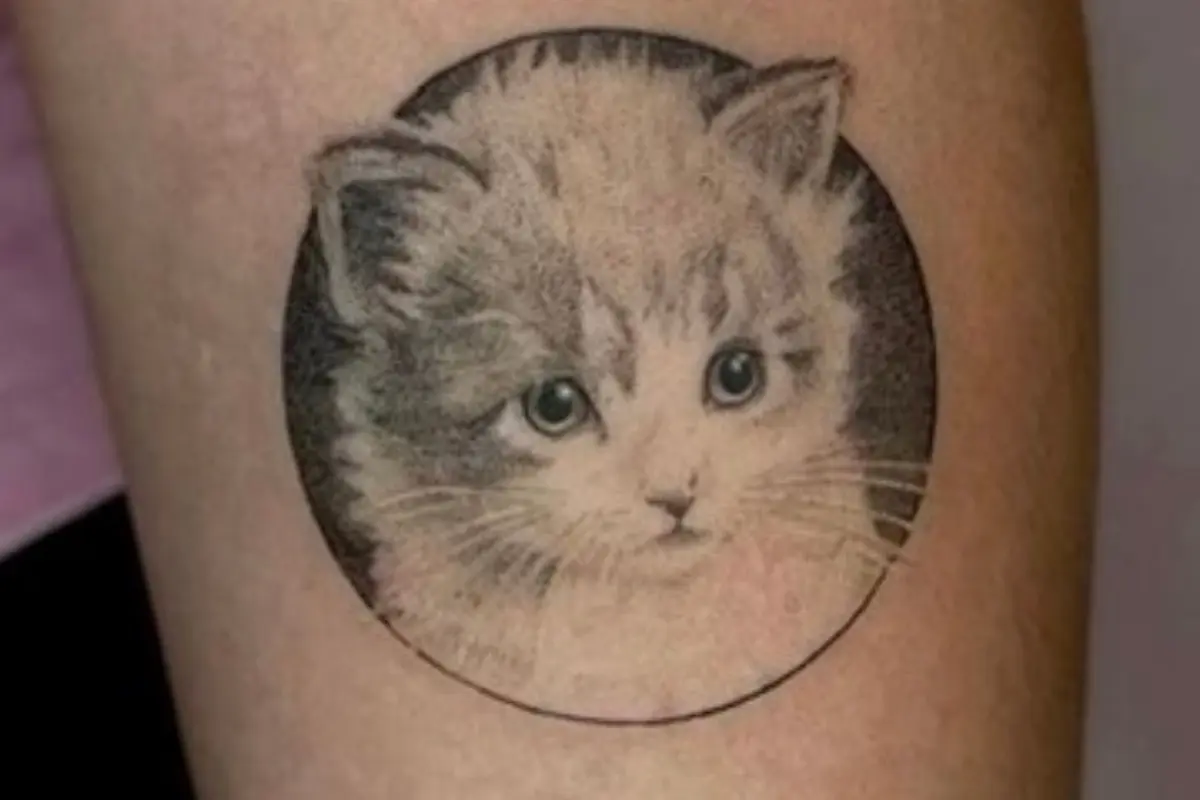
A pet portrait tattoo is a realistic likeness of your dog, cat, or other companion, tattooed from a photo. A good one captures more than looks: it captures the animal’s expression and personality. The result depends on three things: the photo you bring, the style you choose, and an artist who understands fur, eyes, and markings.
The bond with a pet is its own kind of love, and for a lot of people a tattoo is how they carry it. A pet portrait keeps your dog’s alert eyes or your cat’s quiet stare with you for good, whether they are curled up next to you right now or you are honoring one you have lost.
- What a pet portrait tattoo is, and what separates a good one from a flat one
- How to choose a photo that captures your pet’s personality
- When color works better than black and grey for fur and markings
- Why tattooing a cat is different from tattooing a dog
- Which personal touches you can add, from paw prints to a collar
- Where a pet portrait sits best, and how to keep it sharp over time
What Is a Pet Portrait Tattoo?
A pet portrait tattoo is a realistic likeness of an animal, tattooed from a photograph. The goal is to capture the pet you know, not a generic dog or cat. That is harder than it sounds. Animals do not pose, their likeness lives in small things like the tilt of the head and the light in the eyes, and fur is one of the most demanding textures to render in skin. If you want to understand the craft behind it, we cover it in what makes realistic tattoos look so lifelike.
Choosing the Right Photo of Your Pet
Everything starts with the photo, and pets make photos tricky. A few things make a real difference:
- Shoot at their eye level. A photo taken down at their level reads as a portrait. A photo taken from above reads as a snapshot.
- Sharp and well lit. Natural light near a window shows their real coat color and keeps the eyes clear. Avoid flash, which flattens fur and makes eyes glow.
- An expression that is theirs. The alert ears, the head tilt, the lazy squint. That is where the personality lives.
- Get the eyes in focus. If the eyes hold detail, the whole portrait holds. Blurry eyes are the hardest thing to fix.
- Bring several. Animals are hard to catch in one shot. A main photo plus a couple of angles gives the artist room to get it right.
Black and Grey or Color for a Pet Portrait
Style sets the mood and the level of detail. Pets often suit color realism more than human portraits do, because so much of a pet’s identity is in the color: a ginger coat, tabby markings, one blue eye and one green. That said, black and grey is timeless and holds up beautifully, especially for a classic or a memorial piece.
| Style | Why people choose it for a pet |
|---|---|
| Color realism | Captures coat color, markings, and eye color. Best when the color is part of who they are. |
| Black and grey realism | Timeless and understated. Deep contrast and shading render fur beautifully. A classic choice, and common for memorials. |
| Fine line or micro realism | Smaller and more delicate. Suits an understated piece, though very fine fur detail can soften over time. |
Capturing a Dog vs a Cat
A skilled artist does not tattoo a cat the way they tattoo a dog. The challenges are different:
- Dogs. The work is in fur direction and texture, the breed’s proportions, and the nose and mouth. A good dog portrait also catches character, the goofy grin or the noble stare that made them yours.
- Cats. The work is in the fine linework of the whiskers, the coat pattern (tabby stripes, a tuxedo, spots), and above all the eyes, which carry a cat’s whole expression. Cat portraits reward precision and an eye for that touch of aloofness.
When you look at an artist’s portfolio, look for healed work of the animal you have. A studio that nails dogs may have less cat work to show, and fur is unforgiving, so healed proof matters.
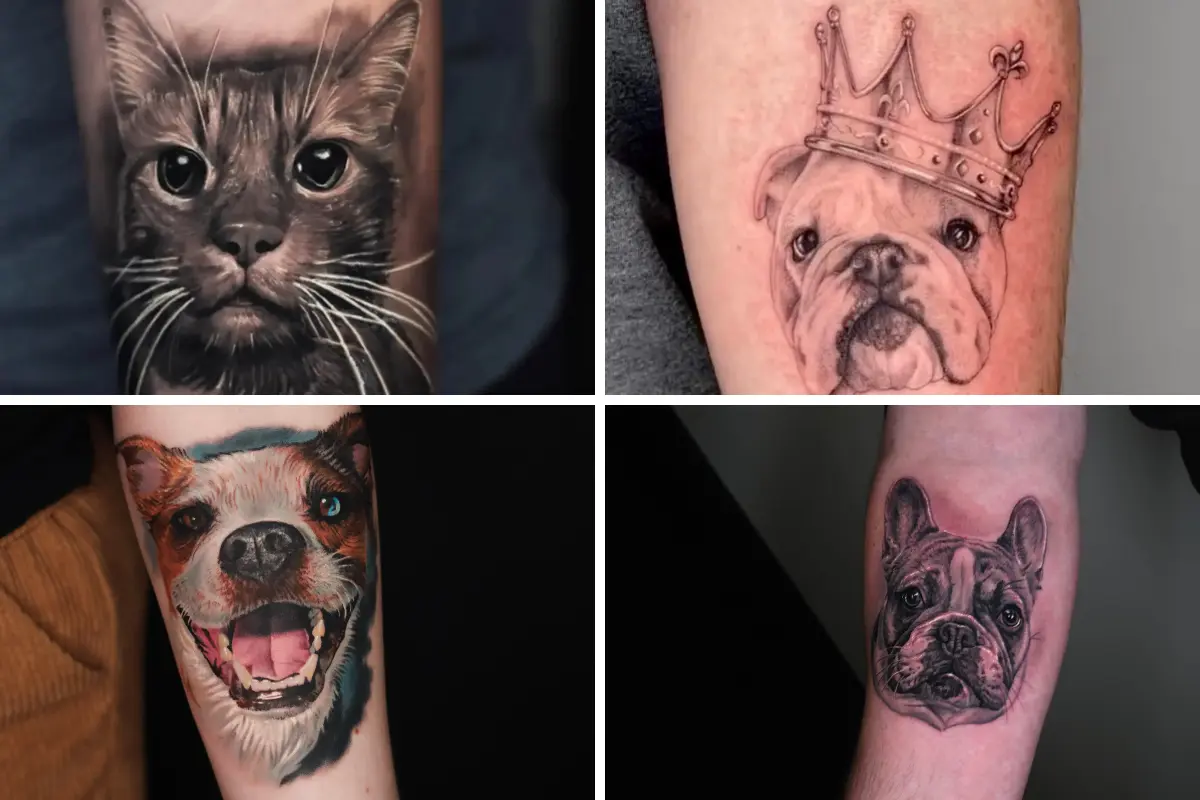
Personal Touches: Paw Prints, Names, and More
A portrait can stand alone, or it can carry small details that make it unmistakably theirs:
- Their actual paw print or nose print, taken at home and worked into the design.
- Their name, in clean lettering, or the tag from their collar.
- A favorite toy, a ball, or a spot they always claimed.
- For a memorial, birth and passing dates, or a small rainbow motif.
Memorial Pet Portraits
Losing a pet is real grief, and a portrait honors it as fully as any tribute. Many people memorialize a dog or cat with a realistic portrait, sometimes paired with a paw print, a date, or a rainbow. If you are also thinking about a portrait of a person you have lost, our memorial portrait tattoo guide covers that side in depth. The care and the craft are the same, only the subject changes.
Placement and Size for a Pet Portrait
Fur and eyes need room to read well, which shapes where a pet portrait tends to sit:
- Forearm and upper arm. The most common choice. Flat, visible, and forgiving.
- Thigh and calf. Large, relatively flat canvases with space for a detailed portrait.
- Chest and ribs. Popular for a portrait that sits close to the heart. Expect more sensitivity.
Going very small is possible, but fine fur detail can blur over the years, so give the piece the size it needs to last.
How Pet Portraits Age, and How to Care for Them
A pet portrait is meant to last a lifetime, and how you heal it in the first weeks matters. Keep it clean, moisturize with an unscented product, and stay out of direct sun while it settles. Over the long run, sun protection is the single best thing you can do to keep fur detail and contrast crisp. Many portraits also benefit from a touch-up down the line, which is normal, not a sign of poor work.
How to Choose an Artist for a Pet Portrait
Pet portraits are a specialty inside a specialty. Look for a realism artist with healed animal work in their portfolio, and ask to see it, since fur and whiskers show every shortcut once a tattoo settles. For a full walkthrough on vetting an artist, read our guide on how to find a good tattoo artist in Chicago.
Ready for a Pet Portrait?
When you are ready to plan one, book a consultation and bring your favorite photos. We will talk through the style, the details, and what will read best years from now, at a pace that respects how much this piece means.
Frequently Asked Questions
Yes, that is how nearly every pet portrait is made. A sharp, well-lit photo at the pet’s eye level gives the best result, and bringing a few angles helps the artist capture a true likeness.
It depends on your pet. Color captures a distinctive coat or eye color, while black and grey is timeless and renders fur beautifully. Both work, and your artist will help you decide based on your photo.
Neither is harder, they are different. Cats demand fine linework for whiskers and coat patterns and precise eyes, while dogs demand fur texture and breed proportions. Look for healed work of the animal you have.
Yes. Paw prints and nose prints taken at home, a name, a collar tag, or a favorite toy are all common additions that make the piece more personal.
Can you tattoo a memorial portrait of a pet that has passed?
Yes. A memorial pet portrait honors that bond fully, often paired with a paw print, a date, or a small rainbow. The craft is the same as any pet portrait.
How much does a pet portrait tattoo cost?
It depends on size and detail. A single portrait differs from a large piece with background or extra elements. We cover what affects the price in our portrait tattoo cost guide, and give you a clear estimate at your consultation.